This thread is to contain information for those who will be attending Drift's "cheap" green laning weekend in north Wales on 9th-11th March 2007.
It is intended to have a preview of both Saturday and Sunday, a little about the accommodation, a list of items to bring and perhaps a little about vehicle preparation and some driving tips.
This topic will be locked, whilst discussion on this event can continue here
Lawrence/Ste

North Wales Green Laning weekend - Preview/Information
Forum rules
Disclaimer:
Please understand that the Frontera Owners Group or any organiser of events will not be held responsible for any loss, damage, accident or injury caused by attending an event. You are responsible for your passengers and for your own safety and should carry the necessary recovery and safety equipment. You agree to follow the rules of the Highway Code, Green Lane Code and club pay and play site rules whichever applies. For greenlane events; All events should adhere to the GLASS Code of Conduct, and please note that Rights Of Way often change and if a TRO (traffic regulation order) has been put in place by the local council you should not drive the lane. If you do not agree to the above you should refrain from taking part in the event.
Disclaimer:
Please understand that the Frontera Owners Group or any organiser of events will not be held responsible for any loss, damage, accident or injury caused by attending an event. You are responsible for your passengers and for your own safety and should carry the necessary recovery and safety equipment. You agree to follow the rules of the Highway Code, Green Lane Code and club pay and play site rules whichever applies. For greenlane events; All events should adhere to the GLASS Code of Conduct, and please note that Rights Of Way often change and if a TRO (traffic regulation order) has been put in place by the local council you should not drive the lane. If you do not agree to the above you should refrain from taking part in the event.
6 posts
• Page 1 of 1
North Wales Green Laning weekend - Preview/Information
by Trugga on Wed Feb 28, 2007 10:54 pm
Last edited by Trugga on Wed Feb 28, 2007 11:22 pm, edited 1 time in total.

-

Trugga - Da Prof!

- Posts: 6258
- Joined: Thu Aug 11, 2005 9:46 pm
- Location: West Midlands (UK)
- Model: 2.0i Sport 3dr
- Registration Year: 1994/L
- Vehicle Name: Little Blue Bug
- Modifications: # ARB Winch bumper
# Wireless operated Warn Winch
# Jackable rockslider sills
# Safety Devices roll cage
# Roof level tree bars
# Roof mounted waffle boards
# Underbody protection
# Smaller, higher fuel tank
# Buttock tuck with protectors
# Cobra Aqua4x4 competition seats
# 3-point harnesses
# Terratrip
# GTE digital dash
# Bonnet pins
# AVM manual front hubs
# FIA battery master switch
# Ally Chequerplate footwells
# De-Cat, straight thro' zorst
# 2" Lift, +2" Rough Country shocks - Region: Midlands
by Trugga on Wed Feb 28, 2007 11:21 pm
As Ste has hinted at, I have been working out a route for the weekend.
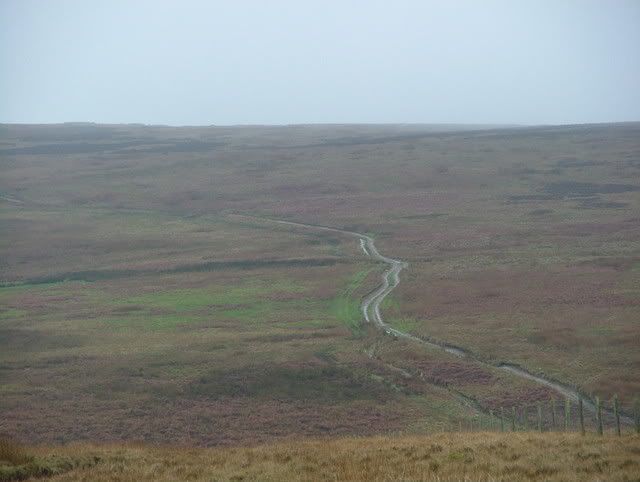
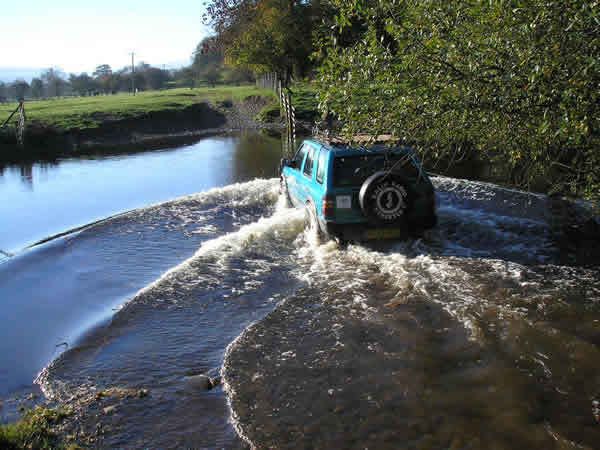
Saturday will be suitable for standard Fronteras and while MT's are not required, a good tread depth is recommended. You will get to experience some breath taking scenery, and get to drive along a narrow part sealed lane, a wet slate climb, shallow mud over a gravel base with side slopes, the "Corwen Car wash" (which can be by passed for those not liking water), the "Wayfarer" and then the "Lost Lake" lane with a bit more mud, water splashes and side slopes.
During Saturday you will get to drive a little over 18 mile off-road, but it will take you 5¾ hours (with coffee breaks and photo stops) and accompanied with 70 miles (2 hours) of transit sections should make for an excellent day out.
The Saturday route will involve a long drive out, but we will then be driving back towards the hut (and the pub)
EDIT: Mileage and timings corrected
Sunday will be a little more "difficult", but once again, by-pass sections will be included for those not wanting to potentially damage there vehicle (gorse bush scratches, possible under body scraping) The Sunday route will head off south from the hut, ending up somewhere near Machynlleth
Here are some pics of some of Saturdays challenges:





Lawrence
Saturday will be suitable for standard Fronteras and while MT's are not required, a good tread depth is recommended. You will get to experience some breath taking scenery, and get to drive along a narrow part sealed lane, a wet slate climb, shallow mud over a gravel base with side slopes, the "Corwen Car wash" (which can be by passed for those not liking water), the "Wayfarer" and then the "Lost Lake" lane with a bit more mud, water splashes and side slopes.
During Saturday you will get to drive a little over 18 mile off-road, but it will take you 5¾ hours (with coffee breaks and photo stops) and accompanied with 70 miles (2 hours) of transit sections should make for an excellent day out.
The Saturday route will involve a long drive out, but we will then be driving back towards the hut (and the pub)
EDIT: Mileage and timings corrected
Sunday will be a little more "difficult", but once again, by-pass sections will be included for those not wanting to potentially damage there vehicle (gorse bush scratches, possible under body scraping) The Sunday route will head off south from the hut, ending up somewhere near Machynlleth
Here are some pics of some of Saturdays challenges:
Lawrence
Last edited by Trugga on Thu Mar 01, 2007 11:23 pm, edited 2 times in total.
-
Trugga - Da Prof!
- Posts: 6258
- Joined: Thu Aug 11, 2005 9:46 pm
- Location: West Midlands (UK)
- Model: 2.0i Sport 3dr
- Registration Year: 1994/L
- Vehicle Name: Little Blue Bug
- Modifications: # ARB Winch bumper
# Wireless operated Warn Winch
# Jackable rockslider sills
# Safety Devices roll cage
# Roof level tree bars
# Roof mounted waffle boards
# Underbody protection
# Smaller, higher fuel tank
# Buttock tuck with protectors
# Cobra Aqua4x4 competition seats
# 3-point harnesses
# Terratrip
# GTE digital dash
# Bonnet pins
# AVM manual front hubs
# FIA battery master switch
# Ally Chequerplate footwells
# De-Cat, straight thro' zorst
# 2" Lift, +2" Rough Country shocks - Region: Midlands
by Trugga on Wed Feb 28, 2007 11:37 pm
Who's going:

Ste

Carl

Mat

Pete + Dan

Ian

Luke + Chris

Lawrence

Sandy + Martin

Leo

Tim (Friday night & most of Saturday day time).
Ste
Carl
Mat
Pete + Dan
Ian
Luke + Chris
Lawrence
Sandy + Martin
Leo
Tim (Friday night & most of Saturday day time).
Last edited by Trugga on Wed Mar 07, 2007 10:42 pm, edited 2 times in total.
-
Trugga - Da Prof!
- Posts: 6258
- Joined: Thu Aug 11, 2005 9:46 pm
- Location: West Midlands (UK)
- Model: 2.0i Sport 3dr
- Registration Year: 1994/L
- Vehicle Name: Little Blue Bug
- Modifications: # ARB Winch bumper
# Wireless operated Warn Winch
# Jackable rockslider sills
# Safety Devices roll cage
# Roof level tree bars
# Roof mounted waffle boards
# Underbody protection
# Smaller, higher fuel tank
# Buttock tuck with protectors
# Cobra Aqua4x4 competition seats
# 3-point harnesses
# Terratrip
# GTE digital dash
# Bonnet pins
# AVM manual front hubs
# FIA battery master switch
# Ally Chequerplate footwells
# De-Cat, straight thro' zorst
# 2" Lift, +2" Rough Country shocks - Region: Midlands
by Trugga on Thu Mar 01, 2007 9:00 am
Accommodation
Gwydyr Mountain Club's Chapel Bunk House
Out side view
Upstairs picture
MultiMap
Here is the location circled, the main red road is the A5 through Capel Curig, the next village you go through after Betwy Coed.

Cost per person is £15 for two nights accommodation. Anything left over (after feeding the electricity meter) will be donated to FOG.
Whilst typically Welsh and rustic, the bunk house does afford a little comfort, with a spacious kitchen/dining area, a comfy lounge, his and her toilet facilities, a vestibule and wet clothes storage area. Upstairs (careful with the stairs though please) are two sets bunks (not the sort you buy from Ikea for the kids room though)
You will need to bring your own sleeping bag (or sheets and blanket) as only a mattress is provided. Also, bring your own wash kit. Crockery and cutlery is available in the kitchen.
The hut interia is strictly No Smoking
Pub
There is th Tyn y Coed pub 10 minutes walk down the road, that serves food (and beer)
There is a nice Cafe that does cooked breakfasts down the lane, The Bryn Glo.
For those using tomtom use the pub address its 10 minutes walk away and 1 minute in a car.
Tyn-y-Coed Inn
Capel Curig
Betws-y-Coed
Snowdonia National Park
North Wales
LL24 0EE
Once there anyone can point you to the "Mountaineering Club hut"
Its nick name is "the chapel" as that is what it once was
Gwydyr Mountain Club's Chapel Bunk House
Out side view

Upstairs picture

MultiMap
Here is the location circled, the main red road is the A5 through Capel Curig, the next village you go through after Betwy Coed.
Cost per person is £15 for two nights accommodation. Anything left over (after feeding the electricity meter) will be donated to FOG.
Whilst typically Welsh and rustic, the bunk house does afford a little comfort, with a spacious kitchen/dining area, a comfy lounge, his and her toilet facilities, a vestibule and wet clothes storage area. Upstairs (careful with the stairs though please) are two sets bunks (not the sort you buy from Ikea for the kids room though)
You will need to bring your own sleeping bag (or sheets and blanket) as only a mattress is provided. Also, bring your own wash kit. Crockery and cutlery is available in the kitchen.
The hut interia is strictly No Smoking
Pub
There is th Tyn y Coed pub 10 minutes walk down the road, that serves food (and beer)
There is a nice Cafe that does cooked breakfasts down the lane, The Bryn Glo.
For those using tomtom use the pub address its 10 minutes walk away and 1 minute in a car.
Tyn-y-Coed Inn
Capel Curig
Betws-y-Coed
Snowdonia National Park
North Wales
LL24 0EE
Once there anyone can point you to the "Mountaineering Club hut"
Its nick name is "the chapel" as that is what it once was
Last edited by Trugga on Sun Mar 04, 2007 6:19 pm, edited 1 time in total.
-
Trugga - Da Prof!
- Posts: 6258
- Joined: Thu Aug 11, 2005 9:46 pm
- Location: West Midlands (UK)
- Model: 2.0i Sport 3dr
- Registration Year: 1994/L
- Vehicle Name: Little Blue Bug
- Modifications: # ARB Winch bumper
# Wireless operated Warn Winch
# Jackable rockslider sills
# Safety Devices roll cage
# Roof level tree bars
# Roof mounted waffle boards
# Underbody protection
# Smaller, higher fuel tank
# Buttock tuck with protectors
# Cobra Aqua4x4 competition seats
# 3-point harnesses
# Terratrip
# GTE digital dash
# Bonnet pins
# AVM manual front hubs
# FIA battery master switch
# Ally Chequerplate footwells
# De-Cat, straight thro' zorst
# 2" Lift, +2" Rough Country shocks - Region: Midlands
by Trugga on Fri Mar 02, 2007 11:27 pm
Vehicle preparation (Tips)
The weekend before, give the car a wash and a good coating of wax – this will make it easier to clean any mud off at a later date.
Remove tow ball covers and towing electrics socket covers as they're bound to come off and get lost, likewise remove any clip-on wheel embellishers (centre caps) as you don't want one to pop off and be either lost in the mud or driven over by the vehicle behind you.
Check washer bottle level (and additive) as there is a possibility you'll get muddy water on the windscreen during your day with us.
Familiarise yourself with the 4x4 mechanism for your particular vehicle, as you will need to use four-wheel-drive and even the low ratio box on occasions.
Also, know where your vehicle tow points are, both front and rear (it might save time and embarrassment on the day).
Ensure your spare tyre is at the correct pressure and that you carry all the tools needed to change a wheel (including locking wheel nut keys).
Whilst we're on the subject of tools, it might be useful to have a means of removing the spark or glow plugs - see "Fording Deep Water" later in this document. Those of you with petrol engines might like to consider bringing a can of WD40 with you (just in case).
You might like to think about protecting you carpet with aftermarket floor mats.
It would be sensible to keep luggage in the boot to a minimum, and any luggage you do carry would be better off tied down.
Communication
Not really necessary, but if you have a PMR (channel 4) or CB (channel 8 ) radio bring them along as it is desirable for the leader to talk to the last car in the convoy to advise on which gates need to be left open or closed. Radio can also provide a good craic with idle chit-chat.
Driving in convoy
We will be driving in a convoy of up to four vehicles. On the tarmac roads, please keep a sensible distance from the vehicle in front (as you would in normal circumstances). When off road, although travelling at much slower speeds, leave a few car lengths between you and the vehicle in front. This will allow the vehicle in front space to manoeuvre should they have difficulty and also allow you to see any obstacles ahead (giving you more time to plan your attack). Please note that as the group leader does not necessarily know the route by heart, they may stop suddenly (before turning into a field or other junction or to switch from 4H to 4L) - we don’t want any shunts
Whilst there is little possibility in getting lost, always keep the vehicle in front in sight, and where possible keep an eye open for the vehicle behind. The last but one vehicle should especially keep an eye open for the last vehicle, as they will often get delayed when closing gates.
Etiquette
We will be sharing the roads with other users, whether they be farmers, cyclists, ramblers or other 4x4 drivers. There is a lot of bad press about so called off-roaders - let us be a gleaming example by being courteous, giving way and by making as little noise and damage as possible.
If we come across horse/pony riders, we will stop our vehicles and switch off the engines. Don't suddenly get out of the car as the opening door might startle the horse/pony.
If we meet another 4x4 convoy, usually the shortest group will drive off the track leaving it clear enough for the other vehicles to pass without them having to leave the track - this prevents wear to the edges of the track (preventing making it artificially wider)
There is a very remote possibility we might come upon some unpleasant response to us being on some lanes. Never enter into an argument and never raise your voice. You are under no obligation to give your name and address or any vehicle details (other than the visible registration mark) unless requested to do so by a uniformed police officer.
Off Road Driving Tips
General
When driving off road, your vehicle will try and steer itself, in so much that the front wheels will try and find the path of least resistance. Therefore, it is important not to grasp the steering wheel with your thumbs inside the spokes, as a jolt to the tyres could (worst case scenario) break your thumb.
Fording a stream
Make sure your doors are shut properly - The door seals are designed to prevent the ingress of water.
Switch off lights (unless it is so dark you cannot see) - as cold water hitting a hot bulb will "blow" the bulb. Also, low fitted lamps might possibly let in water and the short circuit will blow a fuse.
Wait for the vehicle in front to clear the ford before you make your attempt. You want to aim to get to dry land and not have to stop on a possibly slippy exit ramp.
The preferred method of fording deep water is to travel at the same speed as the bow wave that forms in front of your vehicle. This phenomena creates a lower water level in the engine bay thus assisting in keeping it running.
Tip - use 4x4, low, 2nd gear.
Important - if the engine stalls in deep water, do not attempt to restart it unless you are absolutely sure the exhaust is not under water.
If you do stall the engine when fording deep water, there is the strong possibility that with the lack of exhaust pressure, water will travel back up the exhaust pipe and siphon into the engine. If you try to then start the engine, the pistons will not be able to compress the water so something will bend or break - normally the con rods - which means a new engine.
If you are unfortunate enough to stall whilst fording a river, switch off the engine and all electrics. Summon help and get towed to dry land. Remove all the spark/glow plugs and then turn the engine over a few times to expel any water that might have gotten into the engine. When all is dry, refit the plugs and all going well you’ll be back on your way.
Up hill
There is no real trick to this. If you can't find the right normal gear that will get you up without the engine struggling (labouring), try a low ratio gear. Your journey to the top will be slower but your engine will thank you for it. Note that in low ratio mode, it is difficult to make smooth gear changes - don't be too aggressive so as to break something by snatching through the gears. It is often desirable to select the required gear for a climb and start off in that gear on a more level track.
Failed hill climb (i.e., you stalled or got stuck) - don't panic. Ensure engine is switched off. Take your feet of the pedals, leaving it in gear. Relax and breath. So you can't go up, better to reverse down. Handbrake on, clutch, into reverse, off clutch handbrake off. Check steering wheel is straight. Check behind is clear. ignition off, then to on, then start engine and immediately we are driving backwards under control.
Down hill
The trick here is "engine braking". Engage the low box and 1st gear. Take all feet off the pedals and let your vehicle descend the hill at its own speed. If you feel that the speed is too dramatic, lightly apply the brake, but only enough to slow down the engine (not the wheels).
Mud
Different types of mud need different types of technique. For some, normal 4x4 will do. Others need a bit more commitment (or power). Similar to fording a river, wait for the vehicle in front to clear the mud before you make your attempt
Rutted Tracks
Our route will take us across a few fields where the passage of 4x4’s and farm machinery have created ruts (please drive in the existing ruts and don’t make any new ones). On some sections, the ruts will get deeper in so much that your vehicles under protection will rub and scrape, which will naturally slow you down therefore requiring a little more power.
The weekend before, give the car a wash and a good coating of wax – this will make it easier to clean any mud off at a later date.
Remove tow ball covers and towing electrics socket covers as they're bound to come off and get lost, likewise remove any clip-on wheel embellishers (centre caps) as you don't want one to pop off and be either lost in the mud or driven over by the vehicle behind you.
Check washer bottle level (and additive) as there is a possibility you'll get muddy water on the windscreen during your day with us.
Familiarise yourself with the 4x4 mechanism for your particular vehicle, as you will need to use four-wheel-drive and even the low ratio box on occasions.
Also, know where your vehicle tow points are, both front and rear (it might save time and embarrassment on the day).
Ensure your spare tyre is at the correct pressure and that you carry all the tools needed to change a wheel (including locking wheel nut keys).
Whilst we're on the subject of tools, it might be useful to have a means of removing the spark or glow plugs - see "Fording Deep Water" later in this document. Those of you with petrol engines might like to consider bringing a can of WD40 with you (just in case).
You might like to think about protecting you carpet with aftermarket floor mats.
It would be sensible to keep luggage in the boot to a minimum, and any luggage you do carry would be better off tied down.
Communication
Not really necessary, but if you have a PMR (channel 4) or CB (channel 8 ) radio bring them along as it is desirable for the leader to talk to the last car in the convoy to advise on which gates need to be left open or closed. Radio can also provide a good craic with idle chit-chat.
Driving in convoy
We will be driving in a convoy of up to four vehicles. On the tarmac roads, please keep a sensible distance from the vehicle in front (as you would in normal circumstances). When off road, although travelling at much slower speeds, leave a few car lengths between you and the vehicle in front. This will allow the vehicle in front space to manoeuvre should they have difficulty and also allow you to see any obstacles ahead (giving you more time to plan your attack). Please note that as the group leader does not necessarily know the route by heart, they may stop suddenly (before turning into a field or other junction or to switch from 4H to 4L) - we don’t want any shunts
Whilst there is little possibility in getting lost, always keep the vehicle in front in sight, and where possible keep an eye open for the vehicle behind. The last but one vehicle should especially keep an eye open for the last vehicle, as they will often get delayed when closing gates.
Etiquette
We will be sharing the roads with other users, whether they be farmers, cyclists, ramblers or other 4x4 drivers. There is a lot of bad press about so called off-roaders - let us be a gleaming example by being courteous, giving way and by making as little noise and damage as possible.
If we come across horse/pony riders, we will stop our vehicles and switch off the engines. Don't suddenly get out of the car as the opening door might startle the horse/pony.
If we meet another 4x4 convoy, usually the shortest group will drive off the track leaving it clear enough for the other vehicles to pass without them having to leave the track - this prevents wear to the edges of the track (preventing making it artificially wider)
There is a very remote possibility we might come upon some unpleasant response to us being on some lanes. Never enter into an argument and never raise your voice. You are under no obligation to give your name and address or any vehicle details (other than the visible registration mark) unless requested to do so by a uniformed police officer.
Off Road Driving Tips
General
When driving off road, your vehicle will try and steer itself, in so much that the front wheels will try and find the path of least resistance. Therefore, it is important not to grasp the steering wheel with your thumbs inside the spokes, as a jolt to the tyres could (worst case scenario) break your thumb.
Fording a stream
Make sure your doors are shut properly - The door seals are designed to prevent the ingress of water.
Switch off lights (unless it is so dark you cannot see) - as cold water hitting a hot bulb will "blow" the bulb. Also, low fitted lamps might possibly let in water and the short circuit will blow a fuse.
Wait for the vehicle in front to clear the ford before you make your attempt. You want to aim to get to dry land and not have to stop on a possibly slippy exit ramp.
The preferred method of fording deep water is to travel at the same speed as the bow wave that forms in front of your vehicle. This phenomena creates a lower water level in the engine bay thus assisting in keeping it running.
Tip - use 4x4, low, 2nd gear.
Important - if the engine stalls in deep water, do not attempt to restart it unless you are absolutely sure the exhaust is not under water.
If you do stall the engine when fording deep water, there is the strong possibility that with the lack of exhaust pressure, water will travel back up the exhaust pipe and siphon into the engine. If you try to then start the engine, the pistons will not be able to compress the water so something will bend or break - normally the con rods - which means a new engine.
If you are unfortunate enough to stall whilst fording a river, switch off the engine and all electrics. Summon help and get towed to dry land. Remove all the spark/glow plugs and then turn the engine over a few times to expel any water that might have gotten into the engine. When all is dry, refit the plugs and all going well you’ll be back on your way.
Up hill
There is no real trick to this. If you can't find the right normal gear that will get you up without the engine struggling (labouring), try a low ratio gear. Your journey to the top will be slower but your engine will thank you for it. Note that in low ratio mode, it is difficult to make smooth gear changes - don't be too aggressive so as to break something by snatching through the gears. It is often desirable to select the required gear for a climb and start off in that gear on a more level track.
Failed hill climb (i.e., you stalled or got stuck) - don't panic. Ensure engine is switched off. Take your feet of the pedals, leaving it in gear. Relax and breath. So you can't go up, better to reverse down. Handbrake on, clutch, into reverse, off clutch handbrake off. Check steering wheel is straight. Check behind is clear. ignition off, then to on, then start engine and immediately we are driving backwards under control.
Down hill
The trick here is "engine braking". Engage the low box and 1st gear. Take all feet off the pedals and let your vehicle descend the hill at its own speed. If you feel that the speed is too dramatic, lightly apply the brake, but only enough to slow down the engine (not the wheels).
Mud
Different types of mud need different types of technique. For some, normal 4x4 will do. Others need a bit more commitment (or power). Similar to fording a river, wait for the vehicle in front to clear the mud before you make your attempt
Rutted Tracks
Our route will take us across a few fields where the passage of 4x4’s and farm machinery have created ruts (please drive in the existing ruts and don’t make any new ones). On some sections, the ruts will get deeper in so much that your vehicles under protection will rub and scrape, which will naturally slow you down therefore requiring a little more power.
-
Trugga - Da Prof!
- Posts: 6258
- Joined: Thu Aug 11, 2005 9:46 pm
- Location: West Midlands (UK)
- Model: 2.0i Sport 3dr
- Registration Year: 1994/L
- Vehicle Name: Little Blue Bug
- Modifications: # ARB Winch bumper
# Wireless operated Warn Winch
# Jackable rockslider sills
# Safety Devices roll cage
# Roof level tree bars
# Roof mounted waffle boards
# Underbody protection
# Smaller, higher fuel tank
# Buttock tuck with protectors
# Cobra Aqua4x4 competition seats
# 3-point harnesses
# Terratrip
# GTE digital dash
# Bonnet pins
# AVM manual front hubs
# FIA battery master switch
# Ally Chequerplate footwells
# De-Cat, straight thro' zorst
# 2" Lift, +2" Rough Country shocks - Region: Midlands
by Trugga on Sun Mar 04, 2007 11:08 pm
Sunday's proposed route.
Leave our accommodation and head off for the (2.3 mile) lane that Ste and I did last weekend - the one where he got stuck. With care, I believe this lane should be passable by all, although there is the possibility of some gorse bush scratches near the beginning. A "long cut" map will be given to those who don't want to possibly scratch their paintwork.
A drive south will bring us to Sarn Helen (4 miles), that descends through the Coed Y Brenin forest.
Another drive south, will take us to a 5.6 mile lane that over looks Barmouth - we've not recce'd this lane, although I have done it before.
Another short drive south will take us to the "Happy Valley BOAT" before we end up in a lay-by somewhere.
So Sunday looks like 39 road miles and almost 16 miles of lane = 55 miles.
Lawrence
Leave our accommodation and head off for the (2.3 mile) lane that Ste and I did last weekend - the one where he got stuck. With care, I believe this lane should be passable by all, although there is the possibility of some gorse bush scratches near the beginning. A "long cut" map will be given to those who don't want to possibly scratch their paintwork.
A drive south will bring us to Sarn Helen (4 miles), that descends through the Coed Y Brenin forest.
Another drive south, will take us to a 5.6 mile lane that over looks Barmouth - we've not recce'd this lane, although I have done it before.
Another short drive south will take us to the "Happy Valley BOAT" before we end up in a lay-by somewhere.
So Sunday looks like 39 road miles and almost 16 miles of lane = 55 miles.
Lawrence
-
Trugga - Da Prof!
- Posts: 6258
- Joined: Thu Aug 11, 2005 9:46 pm
- Location: West Midlands (UK)
- Model: 2.0i Sport 3dr
- Registration Year: 1994/L
- Vehicle Name: Little Blue Bug
- Modifications: # ARB Winch bumper
# Wireless operated Warn Winch
# Jackable rockslider sills
# Safety Devices roll cage
# Roof level tree bars
# Roof mounted waffle boards
# Underbody protection
# Smaller, higher fuel tank
# Buttock tuck with protectors
# Cobra Aqua4x4 competition seats
# 3-point harnesses
# Terratrip
# GTE digital dash
# Bonnet pins
# AVM manual front hubs
# FIA battery master switch
# Ally Chequerplate footwells
# De-Cat, straight thro' zorst
# 2" Lift, +2" Rough Country shocks - Region: Midlands
6 posts
• Page 1 of 1
Who is online
Users browsing this forum: No registered users and 5 guests